Improving Performance of your Patch Panel Organization
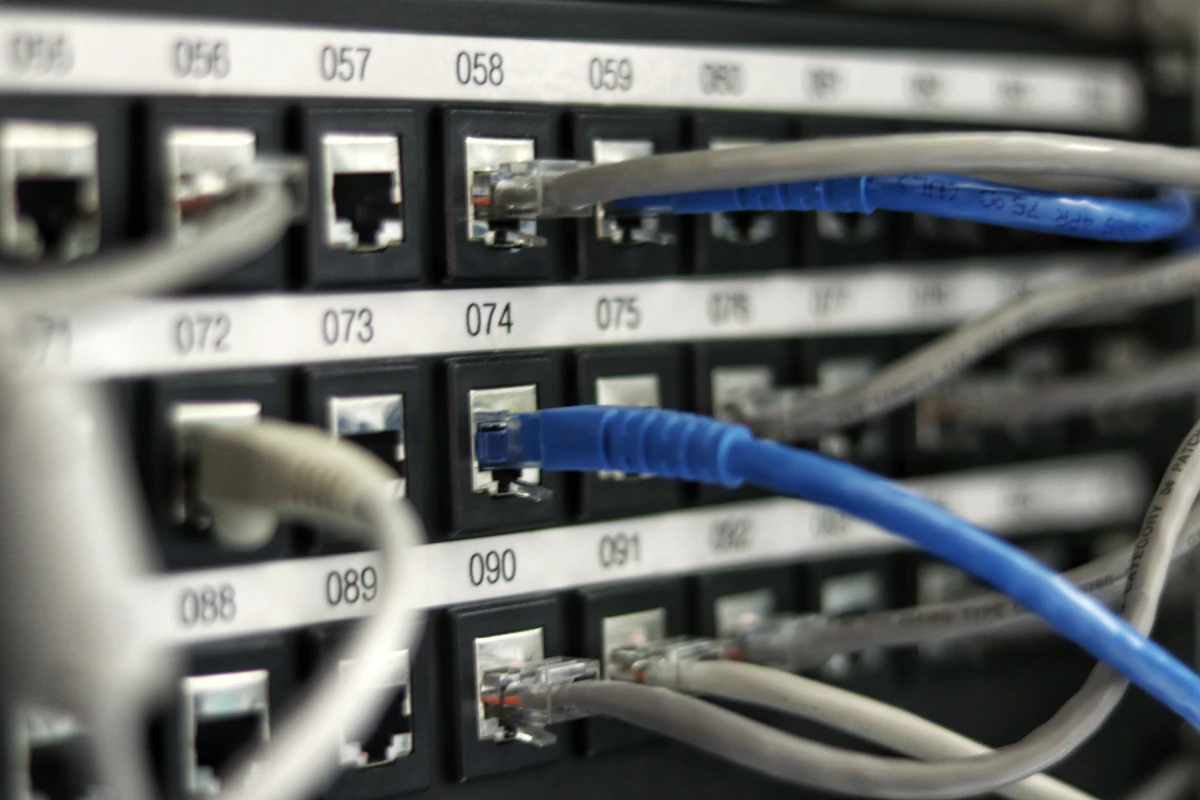
The Critical Role of Patch Panel Organisation in High-Performance Networks
As a seasoned NSI/SSAIB certified Security and Networking Engineer based in Newcastle upon Tyne, I've witnessed first-hand the profound impact that meticulous data cabling and patch panel organisation has on a network's performance, reliability, and security. In today's interconnected world, where everything from IP CCTV cameras and access control systems to VoIP telephony and high-speed data transfer relies on a robust physical infrastructure, a well-managed patch panel is not merely a convenience – it is a strategic asset.
Poor patch panel organisation leads to a myriad of issues: network downtime, frustrating troubleshooting, increased maintenance costs, and compromised security postures. This comprehensive guide, drawing upon decades of practical experience and adherence to stringent industry standards such as those mandated by NSI and the SSAIB Inspectorate Board, will detail how to elevate your patch panel setup from a tangled mess to a high-performing, compliant, and future-proof hub. We'll delve into cabling standards, power considerations, installation best practices, and essential troubleshooting techniques, all designed to ensure your data cabling infrastructure supports your operational demands.
Understanding Cabling Standards and Their Impact on Performance
The foundation of any high-performing network begins with the correct selection and implementation of cabling. The patch panel acts as the central termination point for these cables, making its compatibility and capability paramount.
Cat5e: The Workhorse for Legacy Systems and Basic Needs
Category 5e (Cat5e) cabling was once the industry standard, capable of supporting Gigabit Ethernet (1000BASE-T) over distances up to 100 metres. While still prevalent in older installations or for less demanding applications, it operates at a frequency of up to 100 MHz. For many modern security systems, such as NSI Grade 2 intruder alarms or basic IP cameras, Cat5e can suffice, provided the cable runs are within specification and the installation quality is high. However, its lower bandwidth and susceptibility to crosstalk make it less suitable for bandwidth-intensive applications or future-proofing.
Cat6/6a: The Modern Standard for Gigabit and Beyond
Category 6 (Cat6) cabling significantly improves upon Cat5e, offering enhanced performance up to 250 MHz and tighter specifications for near-end crosstalk (NEXT) and return loss. It also supports Gigabit Ethernet over 100 metres and can facilitate 10 Gigabit Ethernet (10GBASE-T) over limited distances (typically up to 55 metres). For most contemporary deployments, including NSI Grade 3 security systems requiring higher data throughput for advanced analytics or higher-resolution IP cameras, Cat6 is an excellent choice.
Category 6 Augmented (Cat6a) pushes this further, supporting 10 Gigabit Ethernet over the full 100-metre distance at frequencies up to 500 MHz. This makes it ideal for data centre backbones, enterprise networks, and demanding security infrastructures where consistent 10Gbps performance is required across an estate. Cat6a cables are typically thicker due to improved shielding or internal separators designed to reduce alien crosstalk (AXT), which is critical for reliable 10GBASE-T operation.
Cat7/7a and Cat8: Pushing the Boundaries for Future Demands
For environments with extreme bandwidth requirements, Category 7 (Cat7) and Category 7 Augmented (Cat7a) cabling offer performance up to 600 MHz and 1000 MHz respectively, providing support for 10 Gigabit Ethernet and beyond. These cables feature individual shielding for each twisted pair (S/FTP) and overall shielding, drastically reducing crosstalk and external interference. However, their use often requires GG45 or TERA connectors, which are not backward compatible with the RJ45 standard, making them less common in typical office or security installations.
Category 8 (Cat8) represents the pinnacle of copper cabling technology, designed to support 25 Gigabit Ethernet (25GBASE-T) and 40 Gigabit Ethernet (40GBASE-T) over shorter distances (up to 30 metres). Operating at frequencies up to 2000 MHz, Cat8 is primarily intended for data centre and server room environments, connecting high-speed switches to servers. Patch panels for Cat8 must also meet these rigorous specifications to maintain the overall channel performance. While potentially overkill for most security applications today, understanding its capabilities is crucial for future-proofing extremely demanding backbones, especially when considering the Benefits of Using Fiber Optic Backbones for Large Estate Security for larger estates where copper limitations become apparent.
Optimising for Power over Ethernet (PoE) & Thermal Management
The proliferation of Power over Ethernet (PoE) devices – IP cameras, wireless access points (WAPs), VoIP phones, and IoT sensors – has revolutionised network deployments. However, it introduces new considerations for patch panel organisation and cable selection.
PoE, PoE+, and PoE++ (802.3af/at/bt)
PoE standards define varying levels of power delivery:
- PoE (802.3af): Delivers up to 15.4W per port (12.95W available to the device). Suitable for basic IP phones or low-power cameras.
- PoE+ (802.3at): Delivers up to 30W per port (25.5W available). Ideal for pan-tilt-zoom (PTZ) cameras, advanced WAPs, or video conferencing systems.
- PoE++ (802.3bt Type 3 and Type 4): Type 3 delivers up to 60W per port (51W available), and Type 4 delivers up to 100W per port (71W available). These higher power levels support devices like thin clients, LED lighting, and high-performance security cameras with integrated heaters or analytics engines.
When current flows through cable bundles, it generates heat. Higher power PoE standards (especially PoE++) and denser cable bundles significantly increase this thermal load. Excessive heat can degrade cable performance, increase insertion loss, and potentially shorten the lifespan of the cabling and connected active equipment. This is particularly relevant for installations adhering to NSI or SSAIB guidelines, where system reliability and longevity are paramount.
Selecting PoE-Compliant Patch Panels and Cabling
To mitigate heat-related issues and ensure reliable power delivery, several factors must be considered:
- Conductor Gauge: Opt for cables with larger conductor gauges (e.g., 23 AWG for Cat6a over 24 AWG for Cat5e/6) as they have lower resistance and generate less heat. Solid copper conductors are essential; avoid copper-clad aluminium (CCA) for PoE applications due to higher resistance and greater risk of failure.
- Cable Type: U/UTP (unshielded twisted pair) cables are common, but F/UTP (foiled/unshielded twisted pair) or S/FTP (shielded/foiled twisted pair) cables can offer better heat dissipation, especially when housed in well-ventilated trays or conduits.
- Patch Panel Design: Choose patch panels designed to handle higher PoE loads. These often feature improved internal construction and wider spacing between ports to aid airflow. Some panels include integral cable management bars to ensure proper bend radius and reduce strain, both of which are critical for maintaining cable integrity under thermal stress.
- Ventilation: Ensure adequate ventilation within the cabinet or rack housing the patch panels and network switches. Consider active cooling solutions (fans) if temperatures are expected to rise significantly, especially in densely populated racks or those located in warmer environments. This is crucial for maintaining the operational temperature ranges specified by equipment manufacturers, directly impacting system reliability and compliance with security standards.
Best Practices for Patch Panel Installation and Labelling
This section outlines the detailed procedures and techniques for installing and managing patch panels to achieve optimal performance and ease of maintenance.
Rack and Cabinet Selection
The choice of rack or cabinet is fundamental. It must provide sufficient space for current and future equipment, allow for proper cable routing and bend radius, and ensure adequate airflow. For security installations, especially those involving NSI Grade 2/3 systems, lockable cabinets are a must to prevent unauthorised access and tampering. If cabling extends to external environments or industrial zones, consider outdoor-rated enclosures with appropriate IP ratings (e.g., IP66 for protection against powerful water jets and dust ingress, or IP67 for temporary immersion in water) to house connectivity points before they transition to an internal patch panel.
Cable Management – The Cornerstone of Organisation
Effective cable management is not just about aesthetics; it is paramount for performance and troubleshooting.
- Horizontal and Vertical Managers: Utilise horizontal and vertical cable managers within the rack. Horizontal managers guide cables between equipment (e.g., from a switch to a patch panel), while vertical managers route bundles up and down the rack. These prevent tangles, maintain bend radius, and support cable weight.
- Bend Radius: Adhere strictly to the manufacturer's specified minimum bend radius for all cables. Kinking or overly tight bends can degrade signal integrity, especially for higher category cables and those carrying PoE. For example, a typical Cat6 cable might have a minimum bend radius of four times its diameter.
- Strain Relief: Ensure cables are properly secured to avoid strain on terminations. Cable ties (preferably Velcro straps, not harsh zip ties that can compress cable jackets) should be used judiciously, not overtightened, and positioned to support the cable without crimping.
- Pathways: Plan clear, unobstructed pathways for all cable runs from the cable entry point to the patch panel. This minimises congestion and simplifies future additions or changes.
Termination Techniques for Peak Performance
The quality of termination directly impacts network performance. Poor terminations are a common source of signal degradation and network issues.
- Punch-Down: For IDC (Insulation Displacement Connector) type patch panels, use the correct punch-down tool with the appropriate blade (110 or Krone). Ensure wires are fully seated, and excess wire is cleanly trimmed.
- Keystone Modules: If using modular patch panels with keystone jacks, ensure the module's colour code (T568A or T568B) matches the building's wiring standard. Consistency is key. In the UK, T568B is more commonly used, but always verify before termination.
- Minimising Untwisted Pairs: The twists in Ethernet cables are crucial for cancelling out electromagnetic interference (EMI) and crosstalk. When terminating, minimise the amount of untwisted wire as much as possible, typically to no more than 13mm (0.5 inches).
- Cable Sheath Management: Ensure the cable sheath is securely terminated within the connector, providing strain relief and maintaining the cable's integral shielding (if applicable).
- Testing and Verification: Every terminated cable segment (from wall outlet to patch panel port) MUST be tested with a cable certifier. A Fluke Networks DSX-8000 or similar device will verify the link meets the specified Category standard (e.g., Cat6a) across parameters like NEXT, FEXT, Return Loss, Insertion Loss, and length. Certification is a non-negotiable step for professional installations, especially for NSI/SSAIB compliance, providing documented proof of performance.
Comprehensive Labelling – Your Future Self Will Thank You
An organised patch panel without clear labelling is like a library without a catalogue. Effective labelling is critical for efficient management, troubleshooting, and maintenance.
- Consistent Methodology: Develop a consistent labelling scheme and stick to it. This should ideally integrate with your broader building or site numbering plan. For instance, 'Building A-Floor 2-Room 10-Wall Port 01' could be labelled 'A2R10-01' at the patch panel.
- Port-Level Labels: Each port on the patch panel should clearly indicate its corresponding wall outlet or device.
- Cable-Level Labels: Both ends of the horizontal cables connecting to the patch panel should be labelled. Similarly, patch leads connecting equipment to the patch panel should be labelled at both ends.
- Colour Coding: Consider using colour-coded patch leads to visually categorise connections (e.g., blue for data, yellow for PoE security cameras, grey for VoIP phones).
- Documentation: Maintain detailed documentation (digital and physical) that maps each patch panel port to its connected device or location. This is invaluable for troubleshooting and essential for NSI/SSAIB audit trails.
Ensuring Security Compliance and Future-Proofing
Beyond raw performance, a well-organised patch panel infrastructure contributes significantly to security compliance and future adaptability.
Adhering to NSI and SSAIB Standards
For any organisation operating security systems in the UK, adherence to standards set by bodies like the National Security Inspectorate (NSI) and the SSAIB Inspectorate Board is not optional; it's a legal and operational imperative. These standards, such as EN 50131 for intruder alarm systems (defining grades like Grade 2 for low-to-medium risk and Grade 3 for medium-to-high risk installations), EN 50132 for CCTV, and EN 50133 for access control, dictate not only the performance of the security equipment but also the quality and integrity of the underlying cabling infrastructure. Proper cabling, termination, and robust physical security around patch panels (e.g., within locked cabinets) directly contribute to maintaining these compliance levels. Faulty cabling can undermine the performance of even the most sophisticated security sensors or cameras, leading to false alarms, missed events, and ultimately, a compromised security posture. Certified installers, like myself, ensure that all installations meet these rigorous requirements, providing clients with peace of mind and auditable compliance.
Planning for Scalability and Fibre Optic Integration
A well-designed patch panel system allows for easy expansion and upgrades. Consider modular patch panels that accept individual keystone jacks, offering flexibility to mix and match different cable categories (e.g., Cat6a and fibre optic) as needs evolve. Always leave some spare capacity – a good rule of thumb is 10-20% spare ports – to accommodate future growth without immediate re-cabling.
For large estates, campus environments, or applications requiring extremely high bandwidth and long distances, fibre optic cabling becomes indispensable. While this guide focuses on copper patch panels, understanding the seamless integration of fibre is crucial. Fibre optic patch panels (FOPPs) can sit alongside copper panels, serving as termination points for fibre backbones that link buildings or floors. When considering the benefits of fibre, particularly for high-bandwidth security applications spread across expansive properties, I highly recommend consulting Our internal guide: Benefits of Using Fiber Optic Backbones for Large Estate Security. This article details how fibre optic backbones enhance resilience, provide immunity to electromagnetic interference, and support future bandwidth demands, forming a critical component of a truly future-proof network architecture.
Troubleshooting Common Patch Panel Issues
Even with meticulous installation, issues can arise. A well-organised and documented patch panel makes troubleshooting significantly easier and faster.
Diagnosing Connectivity Problems
The most common issues stem from poor connections or faulty cables:
- Loose Terminations: A wire that hasn't been fully seated in the punch-down block or keystone jack is a frequent culprit. Visually inspect all terminations on the patch panel and wall outlet.
- Faulty Patch Leads: Patch leads connecting equipment to the patch panel are often overlooked. These are subject to frequent bending and stress. Swap out suspect patch leads with known good ones.
- Incorrect Wiring (T568A/B Mismatch): If one end of the horizontal cable is terminated T568A and the other T568B, the link will not function correctly. Ensure consistency.
- Cable Damage: Kinked, crushed, or cut cables can cause intermittent or complete loss of connectivity. Visible damage, often hidden behind walls or in conduit, requires careful inspection.
Utilising Cable Testers and Certifiers
Diagnostic tools are indispensable for pinpointing issues:
- Basic Continuity Testers: These inexpensive tools can verify basic wire map (correct pairing and continuity) and detect open or short circuits. They are good for quick checks but provide no performance metrics.
- Advanced Certifiers: For professional troubleshooting and compliance, a full cable certifier (e.g., Fluke Networks DSX series) is essential. These devices perform a comprehensive suite of tests, including:
- Wire Map: Checks for correct pairing, opens, shorts, and split pairs.
- Length: Measures the physical length of the cable.
- Near-End Crosstalk (NEXT) & Far-End Crosstalk (FEXT): Measures signal coupling between wire pairs, indicating interference.
- Return Loss: Measures signal reflections, indicating impedance mismatches or poor terminations.
- Insertion Loss (Attenuation): Measures signal loss over the cable's length.
- Power over Ethernet (PoE) Testing: Verifies voltage, current, and power delivery capabilities, crucial for PoE deployments.
Addressing Performance Degradation
Beyond complete failure, subtle performance issues can plague networks:
- Crosstalk & EMI: While Cat6a and higher are designed to mitigate these, improper termination (too much untwisted wire), tight bundling of unshielded cables, or proximity to power cables can introduce interference, reducing effective bandwidth. Ensure segregation of data and power cables wherever possible.
- Impedance Mismatch: Using cables or connectors of different categories within a single link can create impedance mismatches, leading to signal reflections and increased return loss.
- Overheating in PoE Deployments: As discussed, dense bundling of PoE cables can lead to increased temperatures, degrading performance. Check cabinet temperatures and ensure adequate ventilation. If necessary, redistribute PoE devices across more cables or consider upgrading to higher gauge cabling.
Ethernet Cabling Standards Comparison
This table provides a concise comparison of the key specifications for common Ethernet cabling standards, aiding in informed decision-making for your network infrastructure.
Conclusion: A Well-Organised Patch Panel is a Strategic Asset
Investing time and effort into properly organising your patch panel infrastructure is not merely an administrative task; it is a critical investment in your network's present and future performance, reliability, and security. From selecting the appropriate cabling standards to meticulously planning cable management, termination, and comprehensive labelling, every step contributes to an efficient and resilient network. Adhering to professional standards and certifications, such as those governed by NSI and SSAIB, further ensures your infrastructure meets stringent security and operational criteria.
A well-maintained and clearly documented patch panel minimises downtime, simplifies troubleshooting, reduces operational costs, and provides the scalability needed to adapt to evolving technological demands. By following the detailed guidelines outlined in this guide, you can transform your data cabling setup into a robust, high-performing backbone that confidently supports your organisation's critical systems, today and for years to come.

Figure 2: Quality installation standard deployment for Data Cabling.
? Frequently Asked Questions
Q: What details do you provide regarding Improving Performance of your Low Smoke Zero Halogen (LSZH)?
A: We have written an extensive guide on this. Read our complete guide to Improving Performance of your Low Smoke Zero Halogen (LSZH) or contact Gary Pearce on 07830638337.
Q: What details do you provide regarding Improving Performance of your Gigabit Speeds?
A: We have written an extensive guide on this. Read our complete guide to Improving Performance of your Gigabit Speeds or contact Gary Pearce on 07830638337.
Q: What details do you provide regarding Improving Performance of your Server Rack Grounding?
A: We have written an extensive guide on this. Read our complete guide to Improving Performance of your Server Rack Grounding or contact Gary Pearce on 07830638337.
Q: What details do you provide regarding Improving Performance of your Fiber Optic Fusion Splicing (Part 1)?
A: We have written an extensive guide on this. Read our complete guide to Improving Performance of your Fiber Optic Fusion Splicing (Part 1) or contact Gary Pearce on 07830638337.
Q: What details do you provide regarding Improving Performance of your PoE Power Budgets?
A: We have written an extensive guide on this. Read our complete guide to Improving Performance of your PoE Power Budgets or contact Gary Pearce on 07830638337.
Need a Professional Quote?
Trust Gary Pearce Home Services for NSI and SSAIB certified installations. Expert, reliable, and compliant.
Comments
Post a Comment